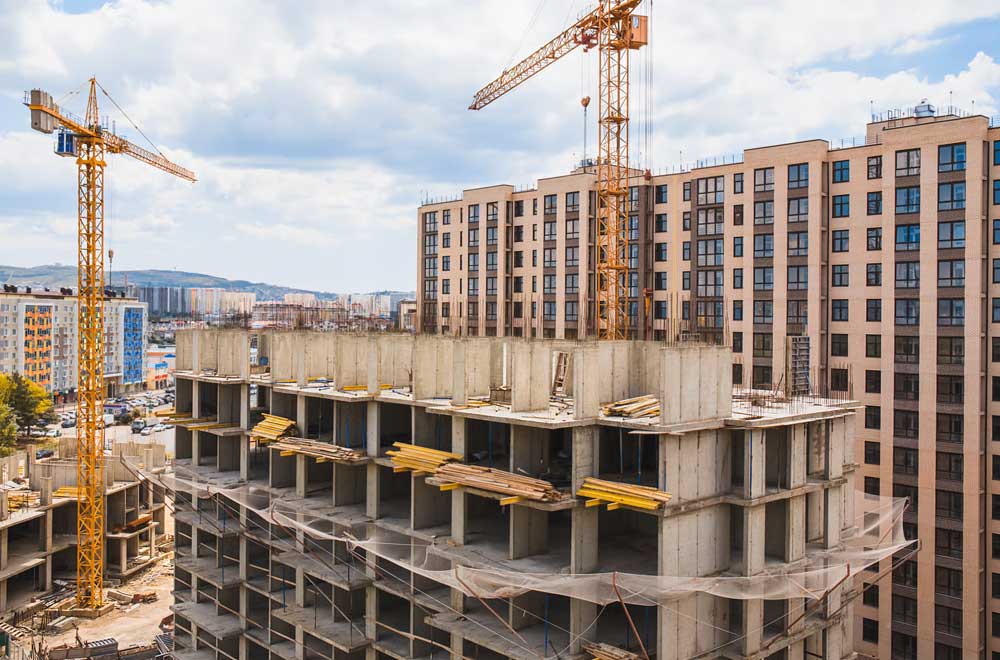
Fluorogypsum – a waste product from industrial production – is now showing immense potential in the construction sector. As anhydrous calcium sulfate, it can serve as a highly effective cement retarder, mortar additive, and concrete filler. This transformation not only contributes to environmental protection but also has the potential to drive the development of the building materials industry. This article will explore how fluorogypsum is being utilized, its applications in construction engineering, and its positive environmental impact.
Fluorogypsum: A “Green Treasure” from the Chemical Industry
Fluorogypsum is a byproduct of the fluorine industry, primarily composed of anhydrous calcium sulfate (CaSO₄). As an industrial waste product, fluorogypsum originally posed problems of land occupation and pollution. However, in recent years, scientists have discovered that, after appropriate processing, it can replace traditional materials and play a significant role in the construction field.
Interestingly, despite its name, it is not traditional dihydrate gypsum, but a more stable anhydrous form. This characteristic makes fluorogypsum superior in some aspects, such as higher compressive strength and durability.
Unlocking its Potential: The Marvelous Transformation under Alkaline Conditions
The true magic of fluorogypsum is revealed when it is added to cement or mortar mixtures. This is because, under certain alkaline conditions, anhydrous calcium sulfate undergoes a hydration reaction, transforming into dihydrate calcium sulfate (CaSO₄·2H₂O). This process is called “alkaline activation,” and it not only improves the material’s performance but also, to some extent, reduces harmful gas emissions.
It’s worth noting that this reaction doesn’t simply occur in any environment. Alkaline activation requires precise control of variables such as temperature, humidity, and alkali concentration to ensure optimal results.
The Smart Choice for Retarders: Key to Stable Construction Timelines
Fluorogypsum, as a cement retarder, provides great flexibility for construction. In hot climates, traditional cement often hardens quickly, causing inconvenience for on-site work. Adding an appropriate amount of fluorogypsum effectively slows down the setting time of the cement, giving workers more time to adjust the position and shape of the components.
Furthermore, another advantage of using fluorogypsum as a retarder is that it can optimize the workability of concrete, improving the efficiency of pouring and molding. This means that for large-scale projects, using this additive can save both time and money.
More than just a retarder: showcasing more possibilities in mortar and concrete
Besides acting as a setting retarder, fluorogypsum is also an excellent mortar additive and concrete filler. It can enhance the mechanical properties of the entire system by altering the pore structure and distribution of the material. Fluorogypsum performs particularly well in the manufacture of self-leveling floors or in crack repair.
It is worth noting that, with technological advancements, research now suggests that, through further optimization of the formula, fluorogypsum may even be widely used in high-performance building materials in the future.